What Is a Company Secretary? Duties, Role, and Meaning
Company secretary is one of the most misunderstood titles in business. It is a governance role, not an administrative one. Here is what it actually involves.

Secy
Personal AI Secretary
Our posts are written by the Secy team, with AI assistance and a human review before publishing.
General information, not professional or legal advice.
Not the Secretary You Picture
When most people hear “company secretary,” they picture an office assistant who answers phones and books meetings.
That picture is wrong.
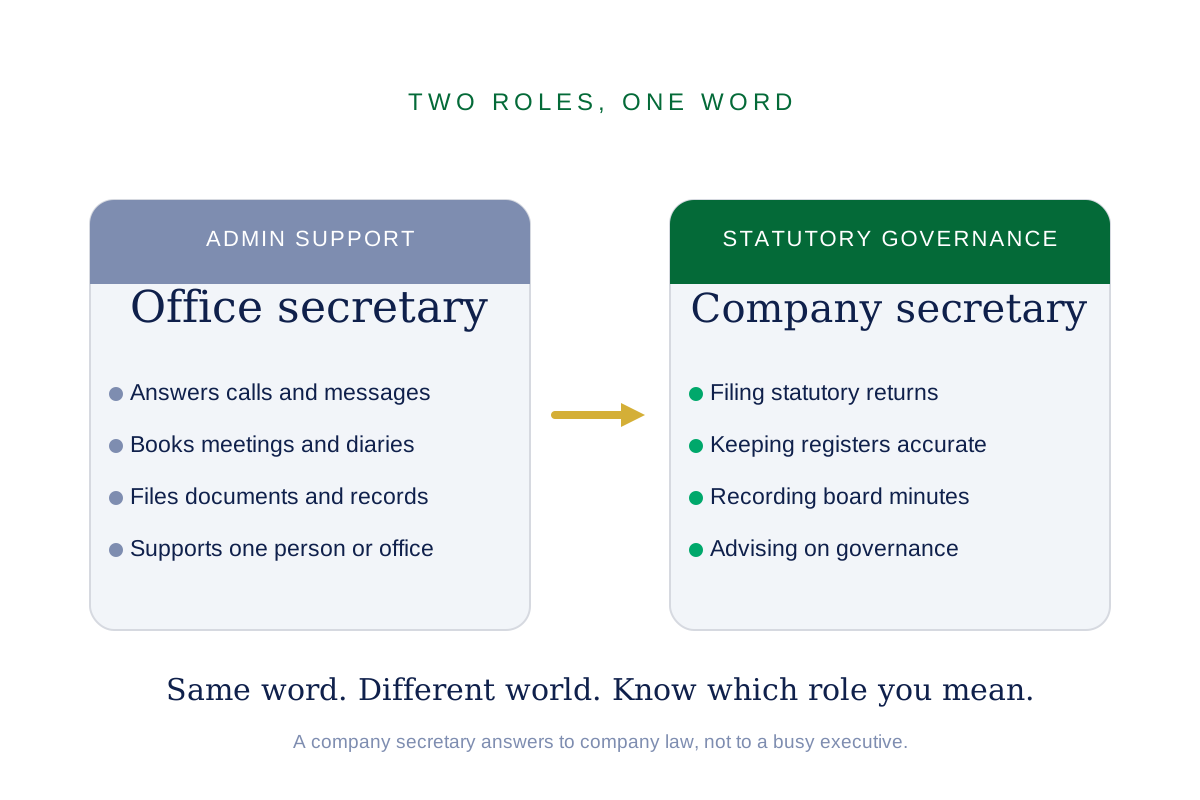
A company secretary is a senior officer with statutory duties. They sit close to the board, manage corporate governance, and carry legal responsibilities that a typical office secretary never touches. The title shares a word, but the role belongs to a different world: the boardroom.
The Short Answer
A company secretary is the officer responsible for a company’s administrative and governance duties under company law.
Those duties include keeping statutory registers, filing documents with the registrar, preparing board and shareholder meeting minutes, and advising directors on compliance and good governance.
In countries that require the role, the company secretary is an officer of the company, with duties defined by statute rather than by the chief executive’s personal needs.
Why the Role Exists
Companies are legal persons. They must keep records, file returns, hold meetings, and follow rules that individuals never think about.
Someone has to own that machinery. The company secretary is that someone: a dedicated officer who makes sure the company meets its legal obligations on time, and that the board governs properly.
This is why the role matters for governance and not just paperwork. A good company secretary is often described as the conscience of the board, because they keep directors honest about process, procedure, and the law.
What a Company Secretary Actually Does
The duties vary by jurisdiction, but they usually include:
- Statutory filings. Submitting annual returns, accounts, and change notifications to the registrar on time.
- Statutory registers. Keeping registers of members, directors, and charges accurate and up to date.
- Board support. Preparing agendas, circulating papers, and recording minutes of board and committee meetings.
- Shareholder meetings. Organizing annual general meetings and documenting resolutions.
- Governance advice. Advising directors on their duties, conflicts of interest, and compliance obligations.
- Legal liaison. Handling correspondence with regulators and ensuring the company acts within its constitution.
None of this is typing and filing for a busy executive. It is corporate administration with legal teeth.
Not an Administrative Role
The difference from an ordinary secretary is not seniority. It is accountability.
An office secretary supports a person. A company secretary serves the company itself, and in many jurisdictions has duties that run directly to the law, not to the managing director.
If the company fails to file or governs badly, the company secretary can be personally exposed alongside the directors. That is a statutory responsibility, not a personal-assistant one.
Required in Some Places, Optional in Others
The rules depend on the country, which is why jurisdiction matters.
- United Kingdom. Private companies are no longer required to appoint a company secretary, though many still do. Public companies must have one.
- India. The Companies Act 2013 requires larger companies to appoint a company secretary, and the role is a recognized statutory position.
- United States. The corporate secretary is common in larger firms, though the exact duties and legal footing differ from the Commonwealth model.
If you are researching the role for a specific company, always check the law in that country. Requirements, titles, and liability change across borders.
Where This Fits in the Secretary Story
The company secretary shows how far the word “secretary” has travelled.
The private secretary supports one person with discretion and scheduling. The company secretary supports an entire legal entity with governance and compliance. Both descend from the same Latin root, secretum, a keeper of secrets and records, but they evolved into very different roles.
That range is exactly why the word is so easy to misunderstand, and so worth defining clearly. New here? Start with What Is Secy?
Sources & Further Reading
- GOV.UK: guidance on running a limited company, including when a company secretary is required (gov.uk/running-a-limited-company)
- UK Companies Act 2006: provisions on company secretaries (legislation.gov.uk/ukpga/2006/46/section/271) (legislation.gov.uk)
- Ministry of Corporate Affairs, India: the Companies Act 2013, including Section 203 on the appointment of a whole-time company secretary (mca.gov.in/Ministry/pdf/CompaniesAct2013.pdf)
- Merriam-Webster: the definition of secretary (merriam-webster.com/dictionary/secretary)
Part of the What Is Secy series. New here? Start with What Is Secy? · Next up: Secretary Terms Glossary
Company secretary is a governance role. Know the difference before you hire for it. 👉 Read: What Is Secy?
More in Secretary




Start with a calmer morning.

From 500+ Beta Testers Reviews