The Evolution of the Secretary: From Scribe to Strategic Partner
From scribe to strategic partner. A short history of how the secretary changed, and why the role never went away.

Secy
Personal AI Secretary
Our posts are written by the Secy team, with AI assistance and a human review before publishing.
The Role That Wouldn’t Go Away
For as long as leaders have existed, someone has kept their records, answered their letters, and held their calendar together.
The title changed many times. The tools changed completely. Yet the job never disappeared, because the need behind it never did. Someone has to keep the world around a busy person in order.
This is the story of how that role evolved, from the quiet scribe to the trusted partner at the center of modern work.
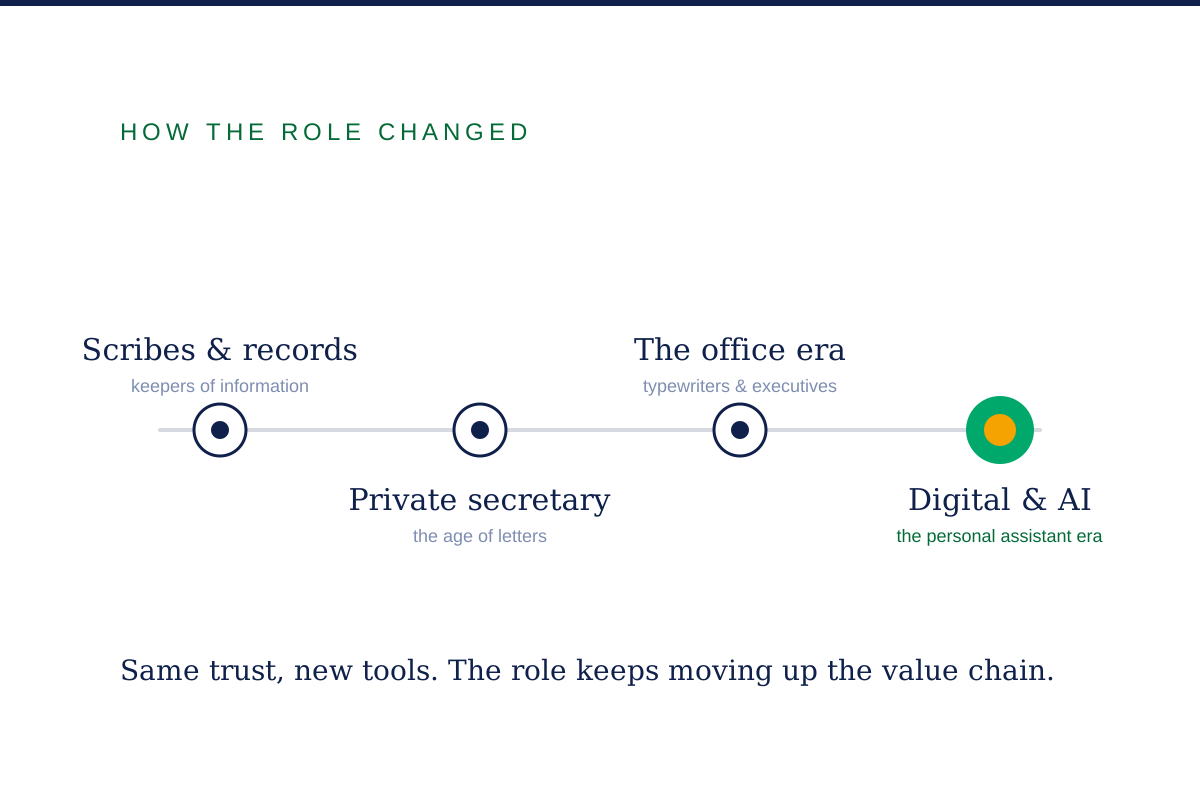
From Scribes and Keepers of Records
The earliest ancestors of the secretary were the record keepers of ancient courts and administrations. Scribes wrote down what mattered, stored what needed to be kept, and guarded what was meant to stay confidential.
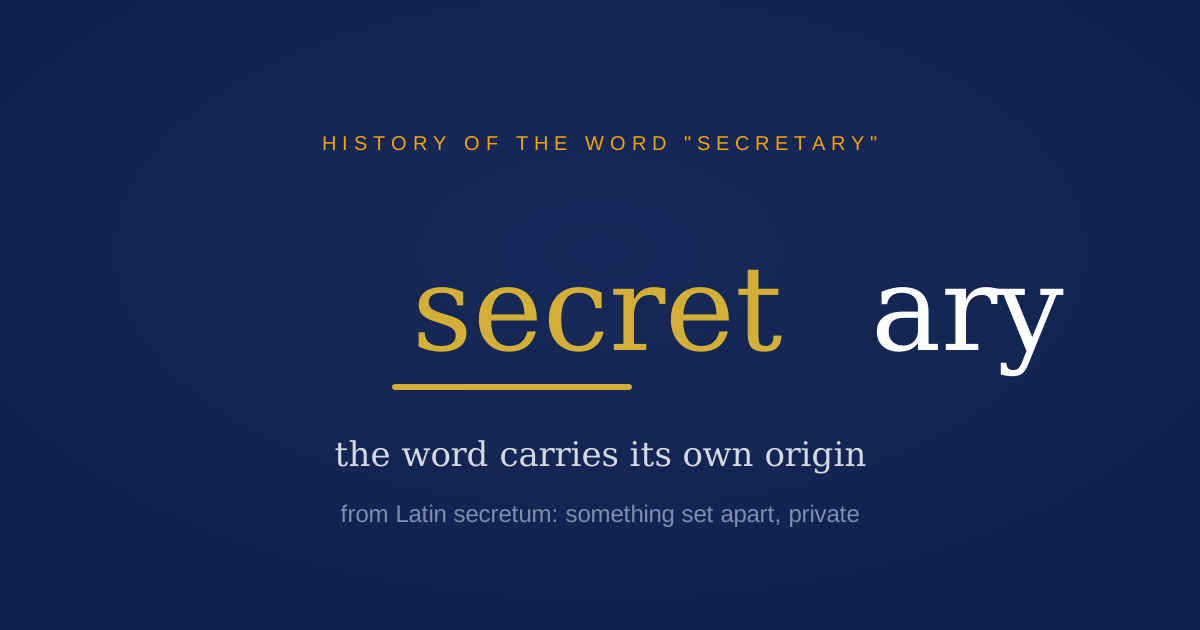
In medieval monasteries and royal households, similar figures managed correspondence, registers, and the private affairs of those in power. These were not clerical helpers in the modern sense. They were people entrusted with secrets, which is exactly where the word secretary comes from.
The role began as the keeper of information long before there were offices to sit in.
The Private Secretary in the Age of Letters
By the 1700s and 1800s, the growing worlds of trade, government, and law produced a flood of letters and documents. Busy officials needed someone to manage it all.
The private secretary emerged as a distinct role: a trusted assistant who drafted correspondence, kept records, protected schedules, and handled sensitive matters with discretion. To be a good private secretary was to be trusted with the leader’s whole world, not just their paperwork.
The Typewriter, the Office, and the Executive Assistant
The late 1800s changed everything. The typewriter, shorthand, and the rapid growth of business created the modern office, and with it the modern secretary.
What had been a rare, senior role became a large profession. Offices needed people who could type, take dictation, file, and manage the flow of work. Over the twentieth century, the secretary became the backbone of the organization and the gatekeeper of the executive’s time.
By mid-century, the most experienced among them were doing far more than typing. They were planning, coordinating, and deciding what deserved the leader’s attention. The job had quietly become an executive function.
From Admin Support to Information Manager
Then came the personal computer, email, and the internet. Typewriters disappeared from desks, and filing cabinets shrank into folders on a screen.
At first, many assumed the secretary would simply vanish. The opposite happened. The role moved up the value chain. Instead of producing documents, secretaries and their successors began managing information, coordinating people, and running the logistics of the day.
That is why titles changed too. Administrative assistant, office manager, executive assistant. Same trust, broader scope, bigger decisions.
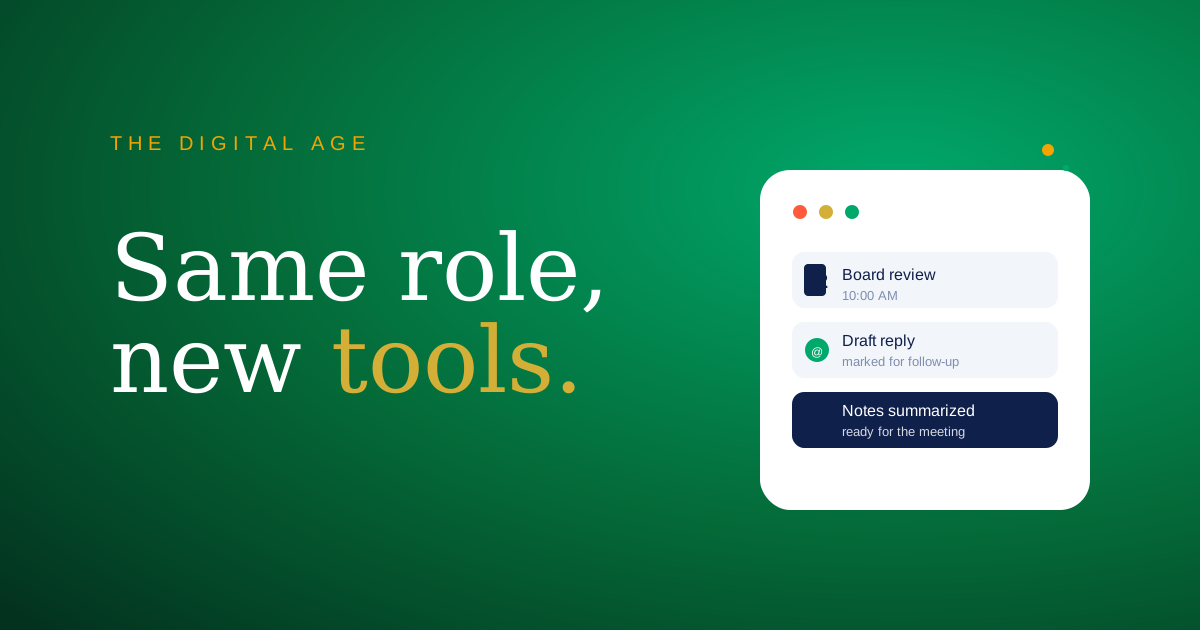
The Digital Shift: Same Trust, New Tools
Look closely at every stage and the same pattern appears. The technology changes, the tasks change, and the secretary adapts to whatever the era demands.
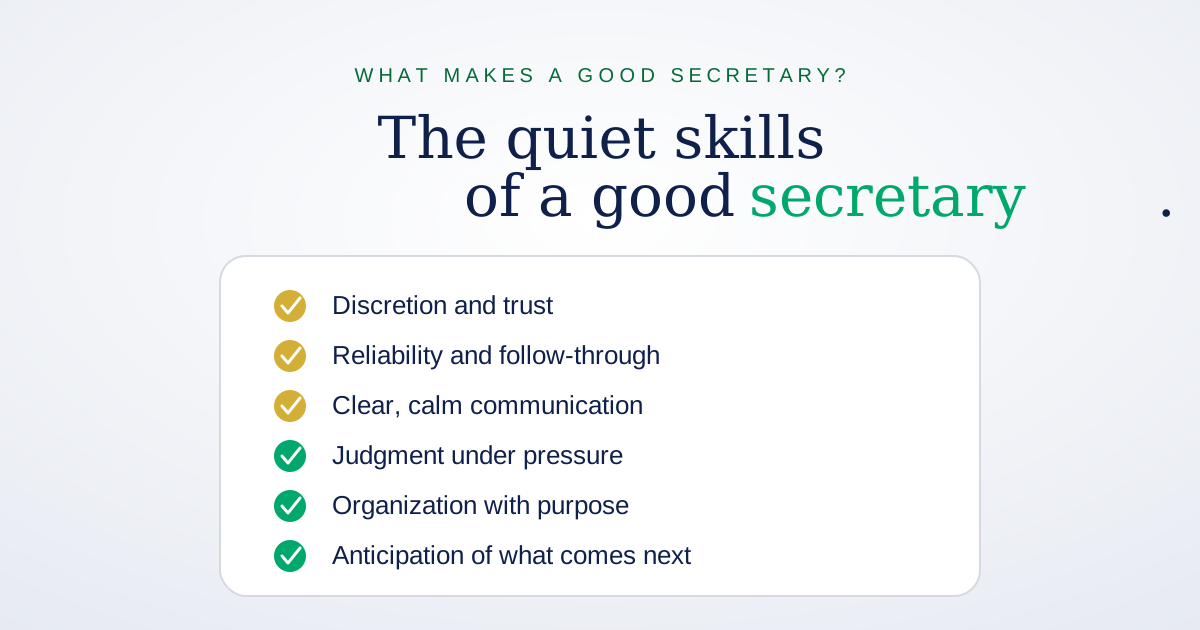
What never changes is the core of the job: organization, discretion, communication, and the quiet ability to make a busy person’s life run smoothly. No tool has ever replaced those qualities. Tools only change how they are applied.
This is worth remembering now, because the newest tools are digital assistants built to handle the same kinds of work for individuals, not just executives. The role is evolving again, this time into something personal.
Why the Secretary Keeps Reinventing
The secretary survives every revolution because the role was never really about the tools. It was about trust and order, and those two things are always in demand.
As long as people have more to manage than time to manage it, someone or something will step in to keep things together. That is the quiet constant in centuries of change.
Sources & Further Reading
- International Association of Administrative Professionals: history of the administrative profession (iaap-hq.org/page/iaap_history)
- National Archives: how records and record keepers shaped government (archives.gov/records-mgmt)
- Merriam-Webster: the shifting meaning of secretary over time (merriam-webster.com/dictionary/secretary)
Part of the What Is Secy series. New here? Start with What Is Secy? · Next up: What Does a Secretary Do?
The secretary keeps evolving because the need for order never goes away. 👉 Read: What Is Secy?
More in Secretary
Start with a calmer morning.

From 500+ Beta Testers Reviews