The Secretary in the Digital Age: How the Role Is Changing
The typewriter is gone, but the secretary is not. Here is how digital tools reshaped the role and what stayed the same.

Secy
Personal AI Secretary
Our posts are written by the Secy team, with AI assistance and a human review before publishing.
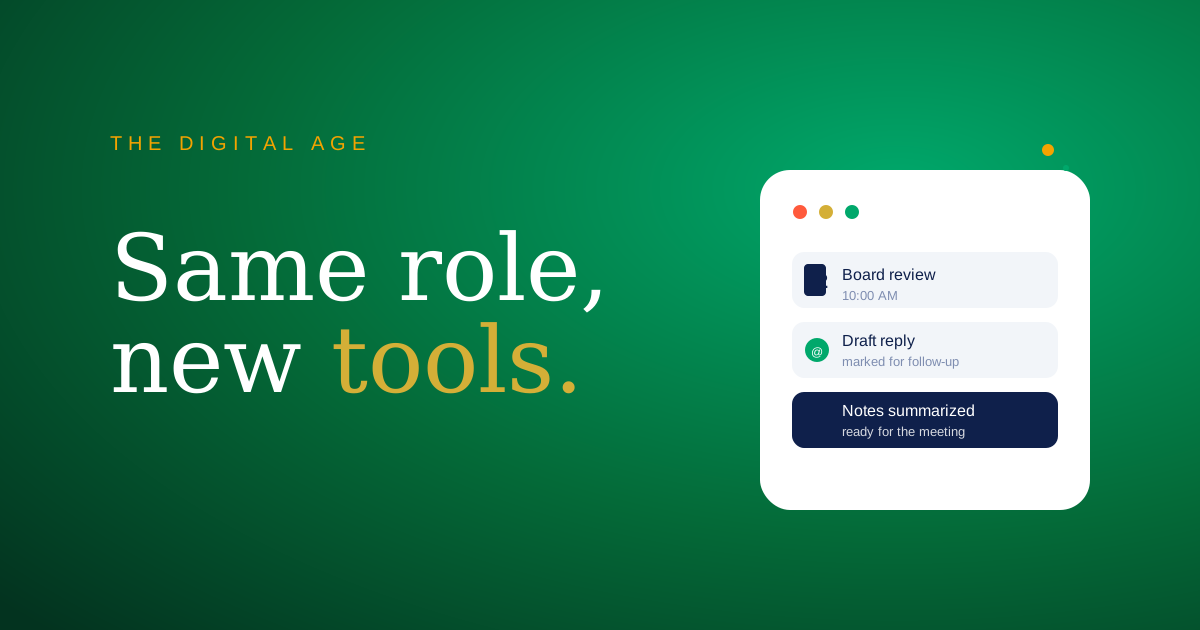
The Typewriter Is Gone. The Role Is Not.
Walk into almost any office today and you will not see a typing pool, a shorthand pad, or a filing cabinet wall. You will see laptops, shared calendars, and inboxes that never empty.
A hundred years ago, a secretary’s identity was tied to physical tools: the typewriter, the carbon copy, the switchboard. The digital age removed nearly all of them. Yet the role did not disappear. It adapted, and in some ways it became more important than ever.
The reason is simple. Tools change, but the job underneath them, keeping someone else’s world in order, does not.
What the Digital Office Actually Changed
Three shifts did the heavy lifting:
- Communication moved to email and chat. Instead of letters and phone calls, secretaries manage inboxes, instant messages, and meeting requests that arrive at any hour.
- Scheduling became shared and self-serve. Calendars are now visible to teams, so the work is less about “finding a slot” and more about protecting priorities and resolving conflicts.
- Records went from paper to the cloud. Files, minutes, and documents live in shared drives with search and version history, which changed filing from a physical task to an information-management one.
Each shift removed a mechanical task and added a judgment task. That pattern is the whole story of the modern secretary.
From Gatekeeper to Orchestrator
The old image of a secretary was a gatekeeper: someone who controlled access to the boss, screening calls and guarding the calendar.
The digital office turned that image upside down. Leaders are now reachable everywhere, and information flows around them whether they like it or not. The secretary’s job became less about blocking access and more about orchestrating attention:
- Deciding which of the two hundred daily messages deserve a reply today.
- Keeping the calendar aligned with real priorities, not just available slots.
- Preparing context so meetings start with everyone on the same page.
- Coordinating across time zones, tools, and teams.
In short, the secretary moved from managing gates to managing flow.
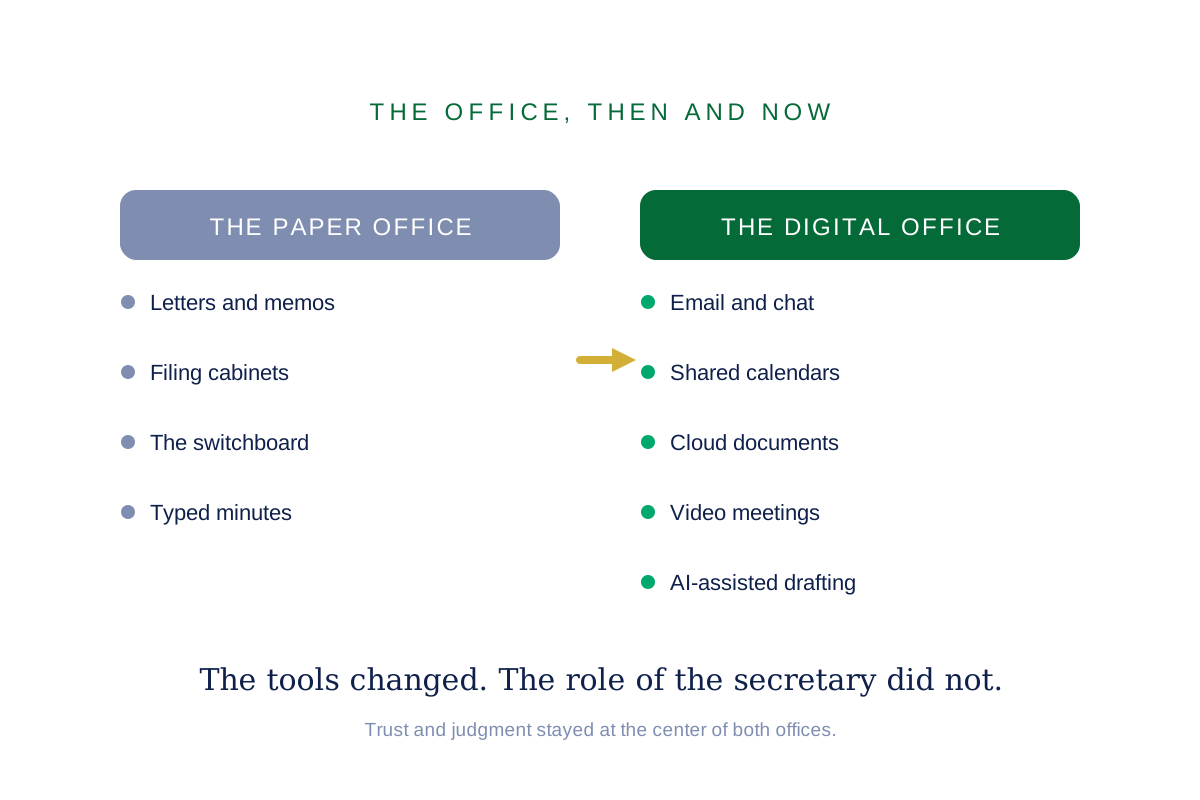
The Tools of the Modern Secretary
A modern secretary is fluent in a specific toolkit:
- Email and messaging for correspondence and triage.
- Calendar and scheduling tools for meetings, travel, and time protection.
- Documents and shared drives for records, notes, and collaboration.
- Video conferencing for meetings that now happen across cities.
- Task and project tools for tracking commitments and follow-ups.
- Notes and knowledge tools for capturing context that others forget.
None of these tools is the job. They are the medium. The value is in what a skilled secretary does with them: filtering, prioritizing, and remembering.
The Rise of the AI-Assisted Secretary
The newest layer is artificial intelligence. Drafting emails, summarizing meetings, finding documents, and suggesting replies are now things software can do in seconds.
This raises an obvious question: if software can draft and summarize, what is left for a human secretary?
The answer is the part that was always hardest to automate:
- Judgment. Knowing which meeting actually matters and which can be declined.
- Discretion. Understanding what is sensitive and what can be shared.
- Relationships. Reading the room, the tone, and the unspoken context.
- Accountability. Being the person who owns the outcome when something goes wrong.
AI becomes a powerful assistant to the secretary, not a replacement for the role. The secretary’s job shifts again, up the value chain, from doing tasks to directing them. This is the natural next chapter of a role that has been reinventing itself for a century. We explore where it leads in The Future of the Secretary.
What Hasn’t Changed
Strip away the screens and the modern secretary does what secretaries have always done:
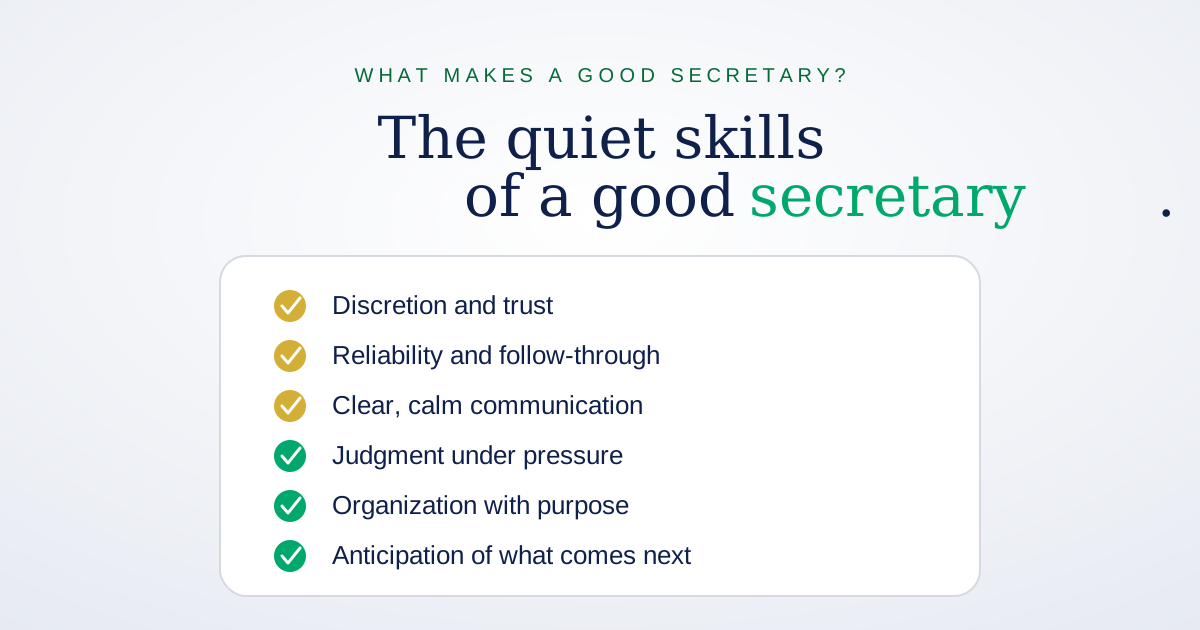
- Keeps confidences and never betrays trust.
- Knows what matters before being told.
- Follows through so nothing is forgotten.
- Makes the person they support look calm and prepared.
Technology changed the tools, the speed, and the scale. It did not change the core, because the core was never about machines. It was about trust between two people.
Why This Matters Now
Every new tool raises the same question: does this replace the secretary? The pattern of the last hundred years says no. Each wave, from the telephone to the PC to the internet, removed routine work and pushed the role toward judgment work.
The digital age did not retire the secretary. It promoted the role. New here? Start with What Is Secy?
Sources & Further Reading
- U.S. Bureau of Labor Statistics: how the occupation is defined today and its outlook (bls.gov/ooh/office-and-administrative-support/secretaries-and-administrative-assistants.htm)
- Merriam-Webster: the definition of secretary and the role (merriam-webster.com/dictionary/secretary)
- Cambridge Dictionary: the modern meaning of secretary (dictionary.cambridge.org/dictionary/english/secretary)
- Oxford Learner’s Dictionaries: the modern meaning of secretary (oxfordlearnersdictionaries.com/definition/english/secretary)
Part of the What Is Secy series. New here? Start with What Is Secy? · Next up: The Future of the Secretary
The office went digital. The secretary went with it, and moved up the value chain. 👉 Read: What Is Secy?
More in Secretary
Start with a calmer morning.

From 500+ Beta Testers Reviews