History of the Word "Secretary": From Latin Roots to Modern Role
Secretary traces back to secretum, the Latin for something private. Here is how a keeper of secrets became the title we know today.

Secy
Personal AI Secretary
Our posts are written by the Secy team, with AI assistance and a human review before publishing.
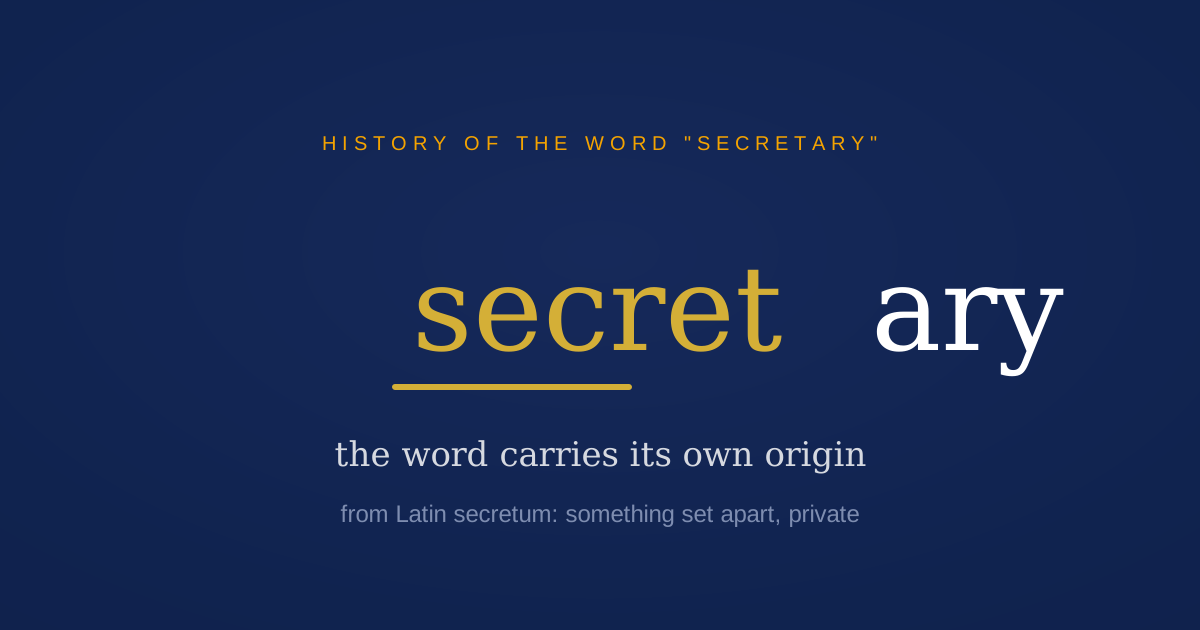
A Word With a Hidden History
Few job titles carry their origin as clearly as secretary.
The word is not about typing or filing. It is about secrecy, in the original sense of the word: things set apart, private, and trusted. Before there were offices or typewriters, there were secretaries, and they existed for one reason. Someone needed a person who could be trusted with what others could not see.
That single idea, confidentiality, is the thread that runs from ancient Rome to the modern inbox.
The Latin Root: Secretum and Secretarius
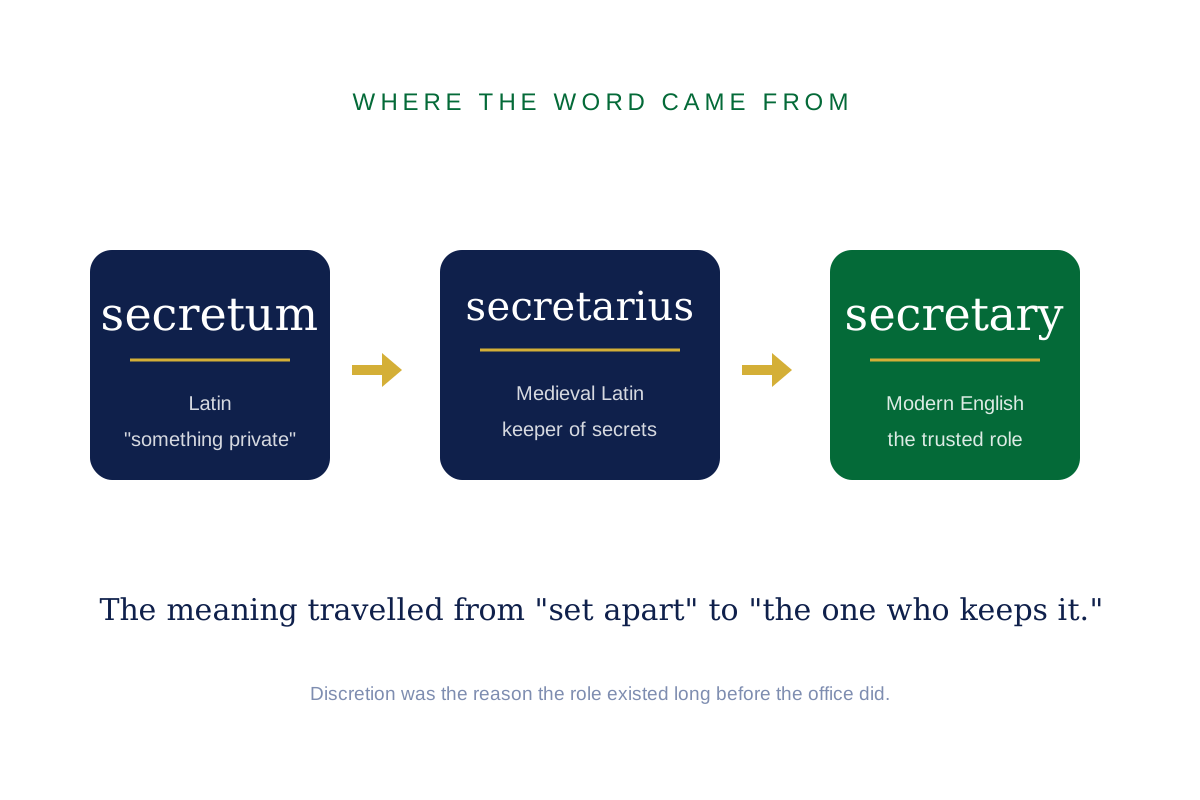
The story starts with the Latin word secretum, meaning “something set apart” or “private.” From the same root come words like secret and secrete.
In Medieval Latin, a secretarius was a confidential officer: a person entrusted with the private matters of a ruler, a bishop, or a noble household. The role was not clerical in the modern sense. It was closer to a trusted counselor who drafted letters, kept confidences, and guarded the door to their master’s affairs.
So the earliest secretaries were, quite literally, keepers of secrets.
Into English by Way of French
The word traveled through Old French as secrétaire and entered English in the fourteenth century.
In Middle English, a secretary was still a person trusted with secrets and confidential writing, often in royal or ecclesiastical service. The association with writing grew because drafting private letters and documents was exactly the task a trusted confidant performed.
Over the centuries, the emphasis shifted. The “keeper of secrets” became the “person who writes,” and the “person who writes” became the “person who manages correspondence and records.” Each step moved the word from the realm of intimacy toward the realm of administration.
The Secret That Never Left
Here is the remarkable part. Even as the role became more administrative, the original meaning never disappeared.
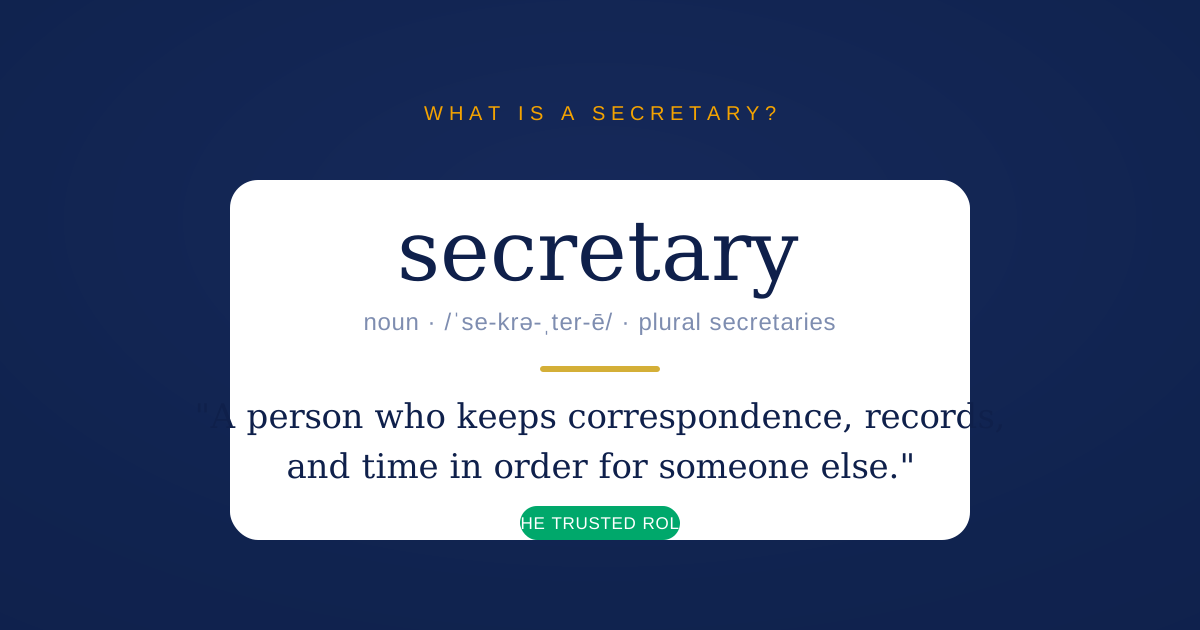
Modern dictionaries still define a secretary in terms of handling correspondence, records, and confidential matters. The trust implied by that Latin root, secretum, is still the unspoken contract of the job.
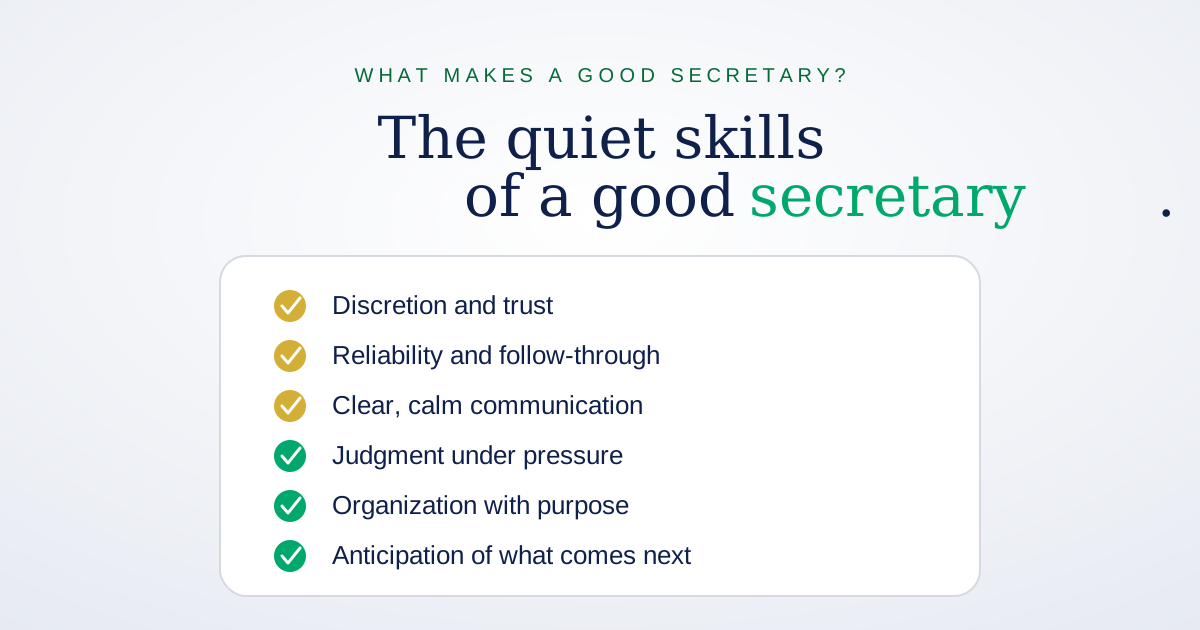
That is why discretion shows up in almost every conversation about what makes a good secretary. It is not a personality trait that was bolted on later. It is the reason the role was invented in the first place.
The Short Forms and the Brand
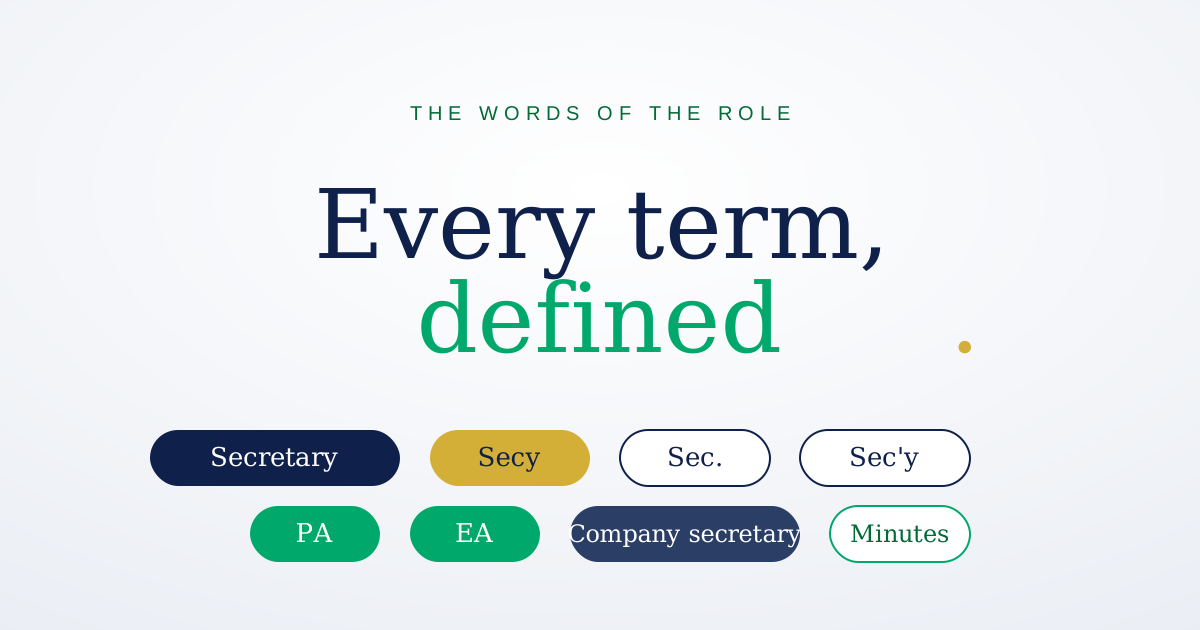
As the word came to be used constantly, on agendas, letterheads, and rosters, it earned its abbreviations: Sec., Secy., and the shorter Sec’y.
These short forms are part of the same story. Words that carry real weight in daily life get shortened. The fact that secretary has so many accepted abbreviations is evidence of how central the role became.
Today, Secy has even taken on a second life as a name for products that act like a secretary, including, as this series explains, our own personal AI assistant. But every modern use still leans on that ancient promise: keeping your private world in order.
Why Etymology Matters
Knowing the root of a word is not trivia. It reframes how we read the role.
A secretary is not someone who types. A secretary is someone who is trusted. The typewriter, the computer, and the AI assistant are all later additions to a role whose core was fixed two thousand years ago.
That is why the role keeps surviving every wave of technology. You can automate typing, scheduling, and drafting. You cannot automate the thing the word was built around: trust. New here? Start with What Is Secy?
Sources & Further Reading
- Online Etymology Dictionary: the full derivation of secretary from secretarius and secretum (etymonline.com/word/secretary)
- Merriam-Webster: the definition and history of secretary (merriam-webster.com/dictionary/secretary)
- Merriam-Webster: the meaning of secretum and related roots (merriam-webster.com/dictionary/secret)
- Cambridge Dictionary: the modern meaning of secretary (dictionary.cambridge.org/dictionary/english/secretary)
- Oxford Learner’s Dictionaries: the modern meaning of secretary (oxfordlearnersdictionaries.com/definition/english/secretary)
Part of the What Is Secy series. New here? Start with What Is Secy? · Next up: What Is a Secretary?
Secretary began as “keeper of secrets.” The trust behind the word is why the role endures. 👉 Read: What Is Secy?
More in Secretary

Start with a calmer morning.

From 500+ Beta Testers Reviews