Private AI Assistants, Explained: What Privacy Should Mean
Anyone can say private. Very few can show it. Here is what privacy should actually mean for an AI assistant, and how to check.

Secy
Personal AI Secretary
Our posts are written by the Secy team, with AI assistance and a human review before publishing.
The Problem With the Word Private
Every assistant claims to be private. The word has become so common that it has almost stopped meaning anything.
For most software, that is harmless. For a personal AI assistant, it is not. An assistant holds the most revealing data you have: your half-formed thoughts, your saved reading, your goals, your unfiltered notes. If any product should earn the word rather than print it, it is this one.
Why Privacy Matters More Here
A search engine learns what you asked once. An assistant learns what you care about over time.
That difference changes the stakes. A memory vault is closer to a private journal than to a search history. It reveals your plans, your worries, and your priorities, often before you have told anyone else. Software trusted with that should behave like a lock, not a funnel.
The Three Promises to Look For
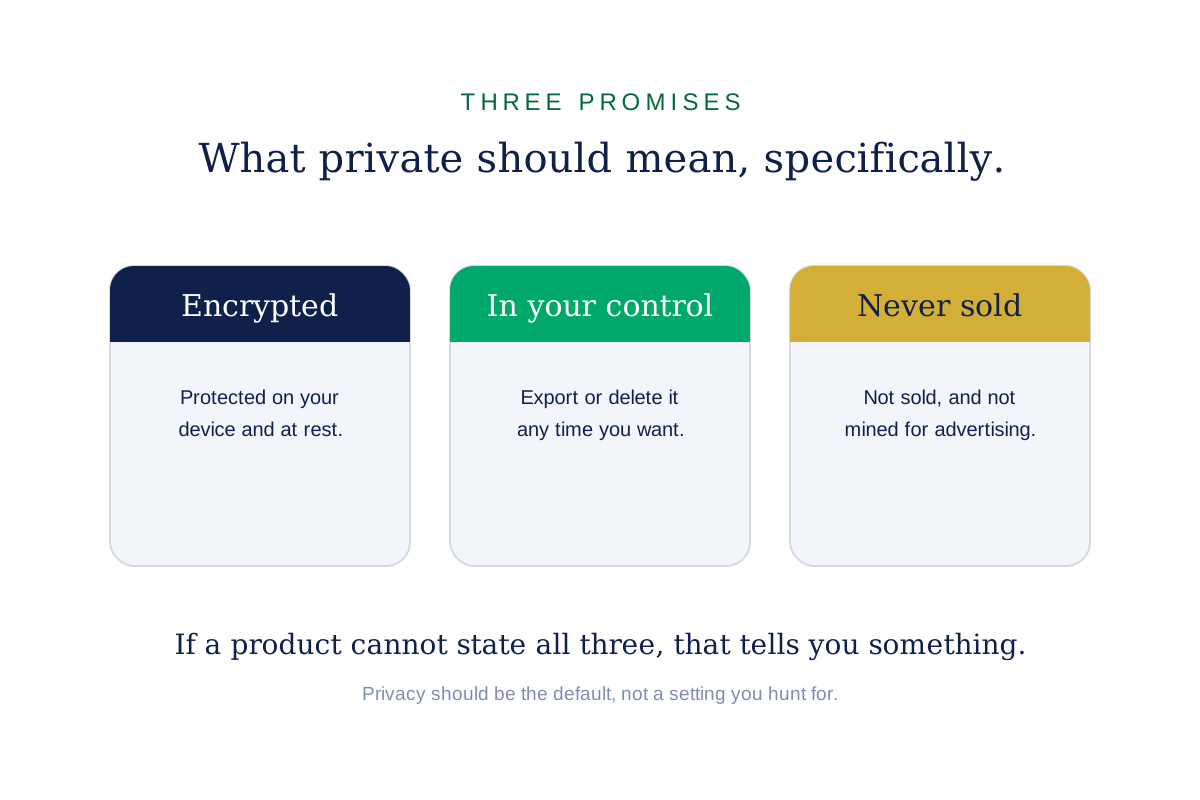
Real privacy comes down to three concrete promises. Each one is verifiable, which is what makes it useful.
- Encrypted. Your data is protected, both on your device and at rest on the server. Encryption should be the default, not an upgrade.
- In your control. You can export what you have saved, delete it, and delete your account. Control is not a support ticket away.
- Never sold or mined. Your data is not the product. It is not sold, and it is not used to advertise to you.
If a product cannot state all three plainly, that tells you something.
Offline-First Is Part of Privacy
There is a quieter privacy feature that rarely gets headlines: being offline-first.
An app that keeps your data on your device and works without a constant connection is doing two things at once. It stays fast and usable when the network is not, and it reduces how often your data has to leave your hands at all. Quiet reliability and privacy often turn out to be the same design choice.
Questions Worth Asking Any Assistant
Before you trust an AI assistant with your real notes, ask:
- Is my data encrypted at rest, and is that stated plainly?
- Can I export everything, and can I delete everything?
- Is there two-factor authentication?
- Does the product explain, in plain language, what is shared with the underlying AI model?
- Does it promise to sell my data? (The answer should be an immediate no.)
These are not exotic demands. They are the minimum for software that remembers your life.
How We Think About It
Secy is private by design. It is offline-first, your data is encrypted, and it stays in your control. You decide what to save, and you can export or delete it. Your information is never sold or mined for advertising, and the app explains in plain language what is shared with the AI model that helps process what you save.
Privacy should not be a setting you hunt for. It should be the default you never have to think about. See How an AI Secretary Handles Memory for why a memory vault deserves this standard, and What Is an AI Secretary? for the bigger picture.
Final Thought
Private should mean specific: encrypted, in your control, never sold. Anything vaguer is marketing.
An assistant that remembers your life has to earn your trust every day. The best way to earn it is to make the promises concrete, and keep them.
Secy is privacy-first: encrypted, offline-friendly, and built so your data stays yours. 👉 https://secy.io
More in Trust & Privacy
Start with a calmer morning.

From 500+ Beta Testers Reviews