Why Your Assistant Should Stay Quiet (Most of the Time)
Every app wants your attention. A good assistant is the one that asks for the least of it.

Secy
Personal AI Secretary
Our posts are written by the Secy team, with AI assistance and a human review before publishing.
The Cost of Being Interrupted
A notification takes a fraction of a second to send and much longer to recover from. You were in the middle of something. Now you are somewhere else, and the thread of the first thing is gone.
This is a strange asymmetry. The cost of an interruption is paid by the person receiving it, and the benefit is usually collected by whoever sent it.
An assistant is in a position to do this constantly. It knows what you saved, what you are working toward, and what you said mattered. It could ping you all day. Most of the value of an assistant, though, comes from what it decides not to say.
Why Products Keep Talking
Notifications are the cheapest engagement metric there is. They pull people back into an app, and being pulled back looks like value on a chart.
So products send more of them, then add a settings screen to let you turn them off, which quietly makes the interruptions your fault rather than theirs.
The pattern is familiar. A tool that was calm at the start becomes a source of noise, and you end up managing the thing that was supposed to manage things for you. For a broader look at why calm is scarce in this category, see What Is an AI Secretary? and From Life Admin to Life Vision.
Three Ways Software Can Reach You
It helps to separate three different behaviours that all get called “being helpful.”
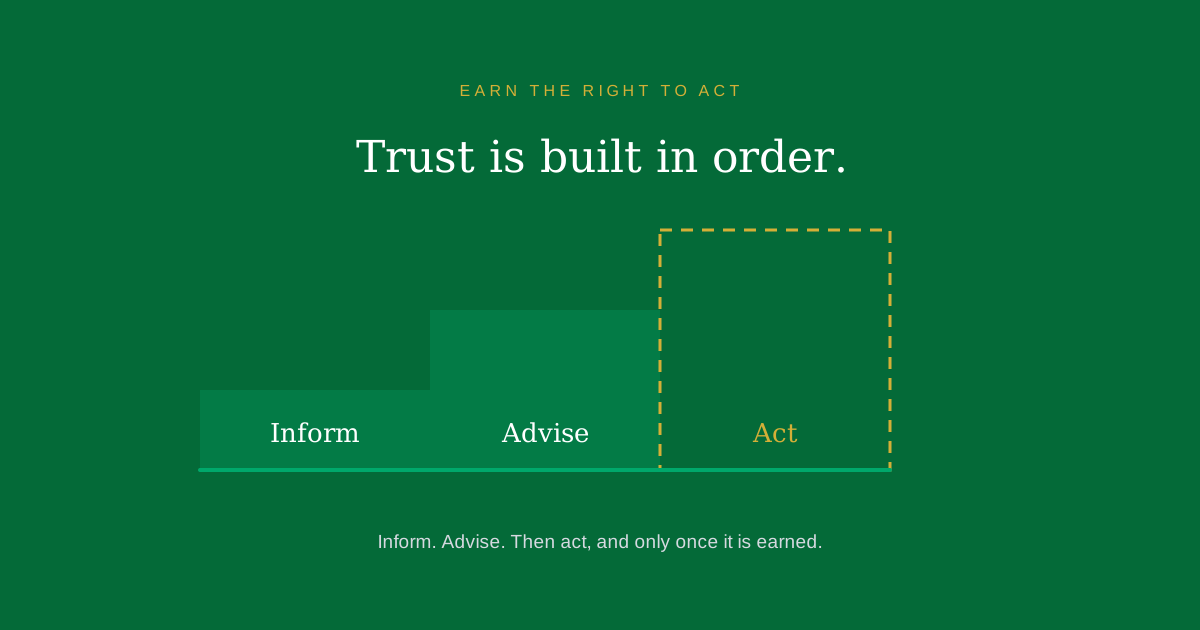
Informing. It tells you something when you arrive. You open it, you read, you leave. The cost to you is nothing, because you chose the moment.
Interrupting. It reaches you when you did not ask. Sometimes this is exactly right, like a reminder for an appointment tomorrow. Sometimes it is noise dressed as helpfulness.
Acting. It does the thing itself, in your accounts, without you. This is the loudest form, and it is the one that needs the most trust, because a mistake here is not an interruption. It is a change to your life.
Most products in this category are racing toward the third. We think the interesting ground is the gap between the first and the second.
Restraint Is a Design Choice
There is a difference between a product that cannot do something and a product that has decided not to.
Restraint is the second. It means the capability might exist, and the product still waits, because the cost of being wrong is paid by you and not by it. A system that acts before it has earned trust is not being ambitious. It is spending someone else’s trust to look capable.
This is why we describe trust as something a product earns in order. You can read the full argument in Why Your AI Should Earn the Right to Act. Restraint is the same principle applied to a smaller question: not whether it should act, but whether it should speak.
What Interrupts You Today
Being specific is more useful than being principled, so here is exactly where Secy stands.
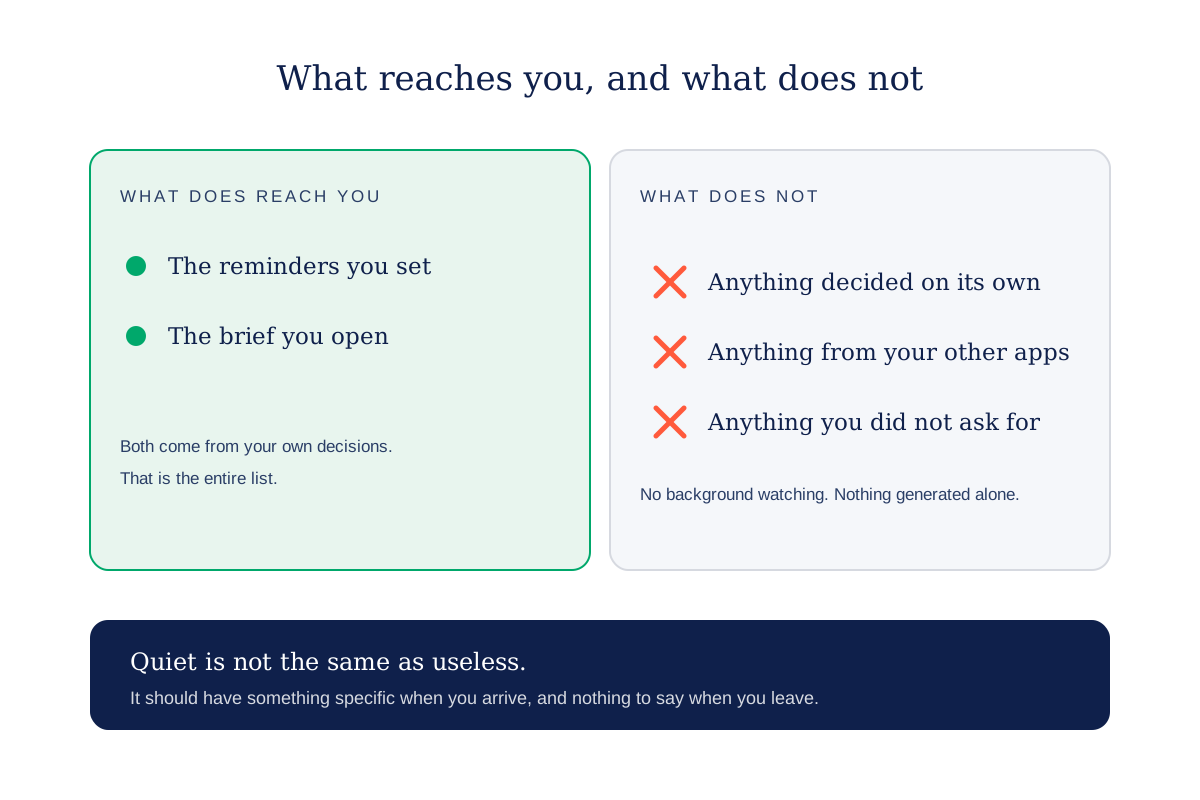
The only things that reach you are the reminders you set yourself, and the brief you choose to open. Both come from your own decisions. That is the entire list.
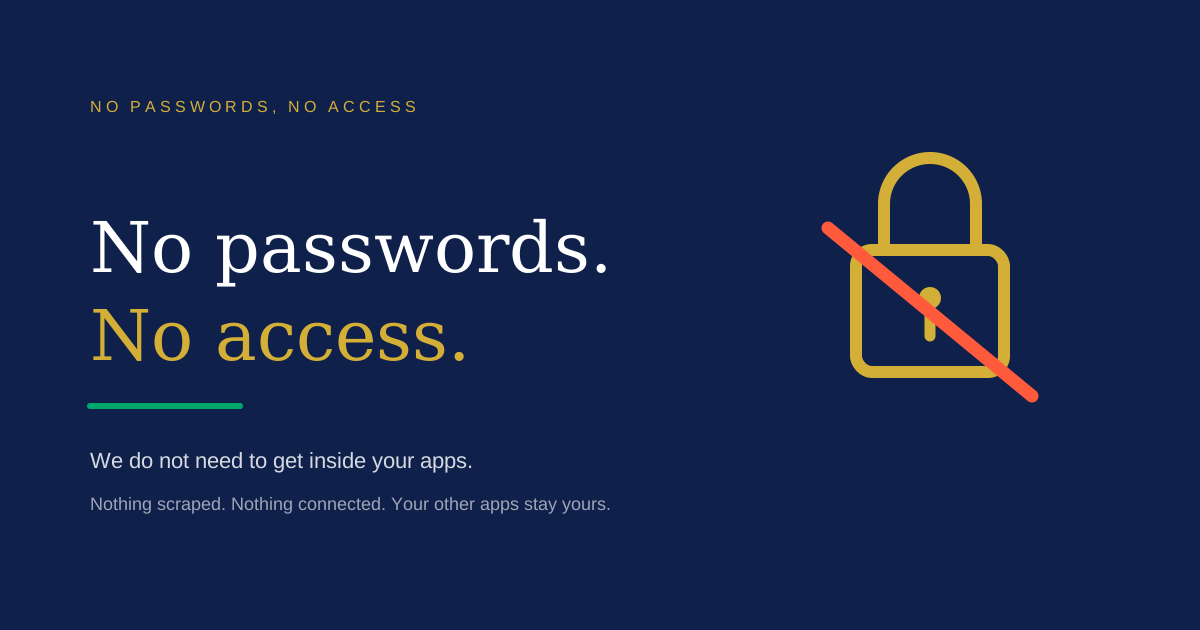
Nothing else reaches you, because nothing else is generated. Secy does not decide on its own that you should be told something. It does not watch your accounts, and it does not run in the background looking for reasons to get in touch. Motions are a collection of todos and reminders that move you forward, and they nudge you at the moment you asked them to.
If that sounds underwhelming, compare it to the alternative. A product that reaches you unprompted is a product that has decided, on your behalf, that its judgement about your priorities is worth your attention. That is a large claim to make on someone else’s day.
How to Tell Quiet From Silent
Quiet is not the same as useless. There is a failure mode on the other side, where a product says nothing because it has nothing to say.
The test is simple. When you arrive, does it have something specific and true for you? If yes, it can be quiet the rest of the time and still be worth keeping. If it only has value when it interrupts you, then the interruptions are not a feature. They are the product, and you are the resource.
A good assistant earns its place when you walk in, and then gets out of the way when you walk out.
Final Thought
Attention is the one thing you cannot get more of. Anything that takes it should have to justify the taking.
Silence is not the absence of help. It is often the shape of it.
Secy speaks when you asked it to, and stays quiet the rest of the time: reminders you set, a brief you open, and nothing running in the background. 👉 https://secy.io
More in Trust & Privacy

Start with a calmer morning.

From 500+ Beta Testers Reviews