Human Secretary vs AI Secretary: What Changes, What Stays
AI is good at memory and logistics. Humans are good at judgment and trust. The useful question is not who wins, but who does what.

Secy
Personal AI Secretary
Our posts are written by the Secy team, with AI assistance and a human review before publishing.
The Question Behind the Worry
Every time a new tool arrives, the same question follows: does this replace the secretary?
The honest answer is more specific than a simple yes or no. Some of the job, the mechanical, memory-heavy part, is genuinely moving to software. The rest, the part that depends on judgment and trust, is not.
Understanding which is which is more useful than arguing about the future.
What AI Does Well
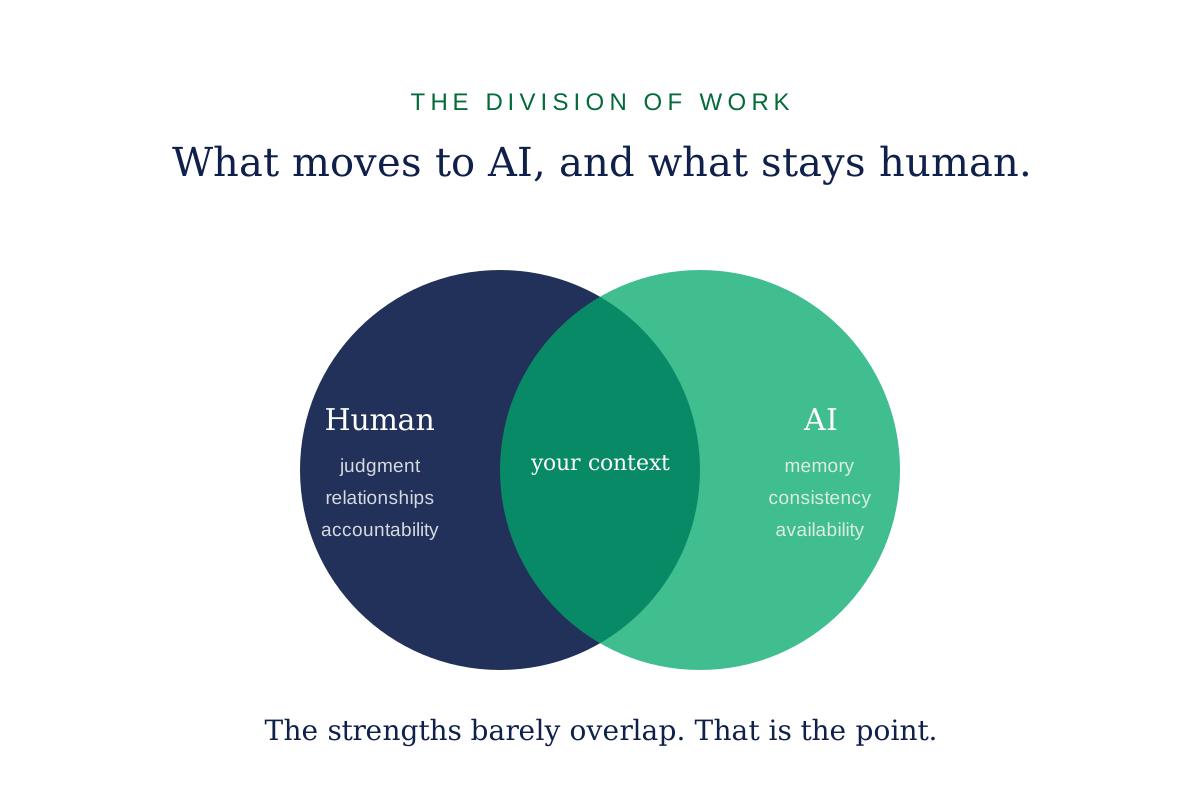
AI is a strong secretary for anything that is patient, repetitive, and memory-based:
- Recall. It never forgets where you put something.
- Consistency. It works the same way on a quiet Tuesday and a chaotic Friday.
- Organization. It tags, groups, and keeps records tidy without being asked twice.
- Availability. It is there at 6 a.m. and at midnight.
- Reminders. It surfaces what you committed to, on schedule.
For a person drowning in their own notes and links, this is most of the battle.
What Stays Human
The parts of the role that depend on being a person do not transfer.
- Judgment. Knowing which meeting truly matters and which can be declined.
- Relationships. Reading a room, a tone, or a silence that carries meaning.
- Discretion with nuance. Understanding not just what is private, but why and for whom.
- Accountability. Being the one who owns the outcome when something goes wrong.
- Representation. Standing in for someone and being trusted to do it well.
These are not features waiting for a model upgrade. They are reasons the human role exists, and they are why a good secretary has always been more than a task-runner.
A Fair Comparison
| Human secretary | AI secretary | |
|---|---|---|
| Strength | Judgment, relationships, trust | Memory, consistency, availability |
| Weakness | Time, cost, single point of attention | No real judgment, no accountability |
| Best at | Decisions and people | Recall and routine |
| Cost of a mistake | High, personal | Low, correctable |
Notice that the strengths barely overlap. That is the point.
The Pattern From the Last Century
This is not the first time the role has split. The typewriter, the telephone, the computer, and email each removed a mechanical layer and pushed the secretary further toward judgment work.
AI is the same move, one step larger. It takes the recall-and-organize layer and leaves the human layer more visible, not less valuable. The role has always climbed. This is another rung. See The Future of the Secretary
Who This Is For
Two groups get something useful from this comparison.
If you have a human assistant, an AI secretary is not a replacement. It is a memory layer that makes their time go further, so they spend it on the decisions instead of the filing.
If you do not have one, an AI secretary is the first realistic way to get the memory and follow-through half of the job for yourself, without hiring anyone. It will not read the room. It will not forget your commitments either.
Final Thought
AI takes the part of the job that is about storing and retrieving. Humans keep the part that is about judging and caring.
That division is not a loss. It is the role finally getting the memory it always needed.
Secy is the memory half: a calm, private AI secretary for the logistics of your life. 👉 https://secy.io
More in AI Secretary
Start with a calmer morning.

From 500+ Beta Testers Reviews