Who Runs the Household? The Family's Invisible Second Job
The dishes get noticed. The remembering does not. Household admin is a real second job, and its hardest part is the part nobody can see.

Secy
Personal AI Secretary
Our posts are written by the Secy team, with AI assistance and a human review before publishing.
The Job Nobody Counts
Ask who runs your household and you will get an answer about chores. Who cooks, who cleans, who does the school run. Those are real, and they are visible, which is exactly why they get counted.
Then notice what is missing from the answer. Who noticed the shoes no longer fit. Who knows the renewal date. Who remembered that the form was due, and that the appointment needs rebooking.
That is the other half of the job, and it does not show up in the answer because it does not show up anywhere.
Visible Work and Invisible Work
The useful distinction is not big tasks versus small ones. It is doing versus tracking.
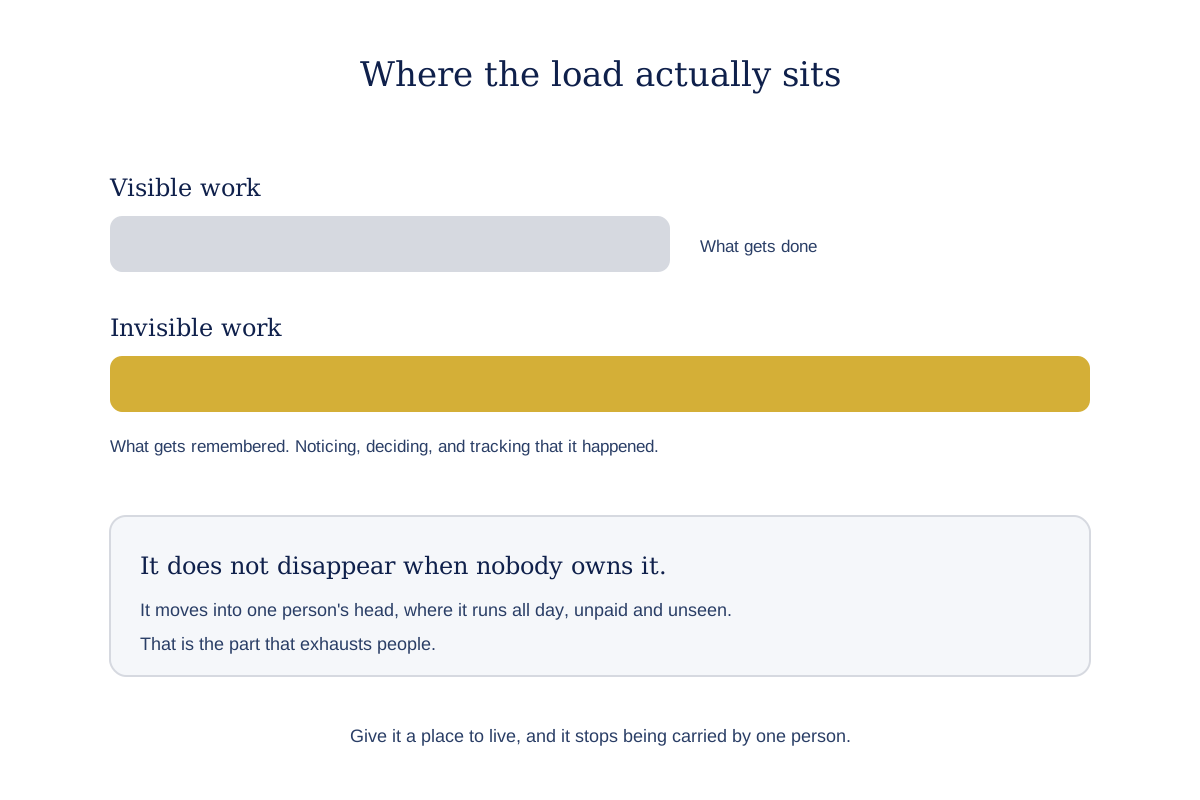
Visible work is what gets done. Laundry, meals, tidying, the school run, the bills. It is finite, it is observable, and it can be handed over in a sentence.
Invisible work is the management of it. Noticing what needs doing, working out the options, and monitoring that it happened. It stays invisible because it is uninterrupted. It happens in the shower, on the walk, at 2am.
Household research draws the same line. One study of household labour split it into four parts: anticipating what will need to be done, identifying the options, deciding between them, and monitoring whether it actually got done. Only the last part leaves a visible trace.
Why “Just Ask Me” Does Not Fix It
The most common attempt at fairness is also the least fair. Tell me what to do, and I will do it.
It sounds reasonable. It leaves the entire invisible half exactly where it was. Someone still has to notice, decide, and track. The hands changed. The mind did not.
That is why two people can split the chores evenly and one of them still feels like they run the place alone. The load was never the laundry.
Naming It Changes It
Invisible work is hard to share because it cannot be pointed at. So the first move is to make it visible.
Write down everything you are currently the only one tracking. Not the tasks. The noticing. The dates, the renewals, the things that will become urgent if nobody remembers.
The list is usually longer than people expect, and more useful than an argument, because it turns a feeling into something you can both look at. The delegation filter in You Are Not Bad at Delegating works on that list directly.
Giving the Load Somewhere to Live
Even a shared list has a problem. It becomes one more thing to hold in your head. The point is not to move the load onto a better list. It is to get the tracking out of a person entirely.
That is the shape an AI secretary fits. Secy keeps what you save, so the open loops have somewhere to live instead of circling. Motions turn a date or a decision into a reminder that reaches you at the right moment, so nothing depends on someone remembering. News and briefs cover the outside world, so you are not the only channel for what is happening.
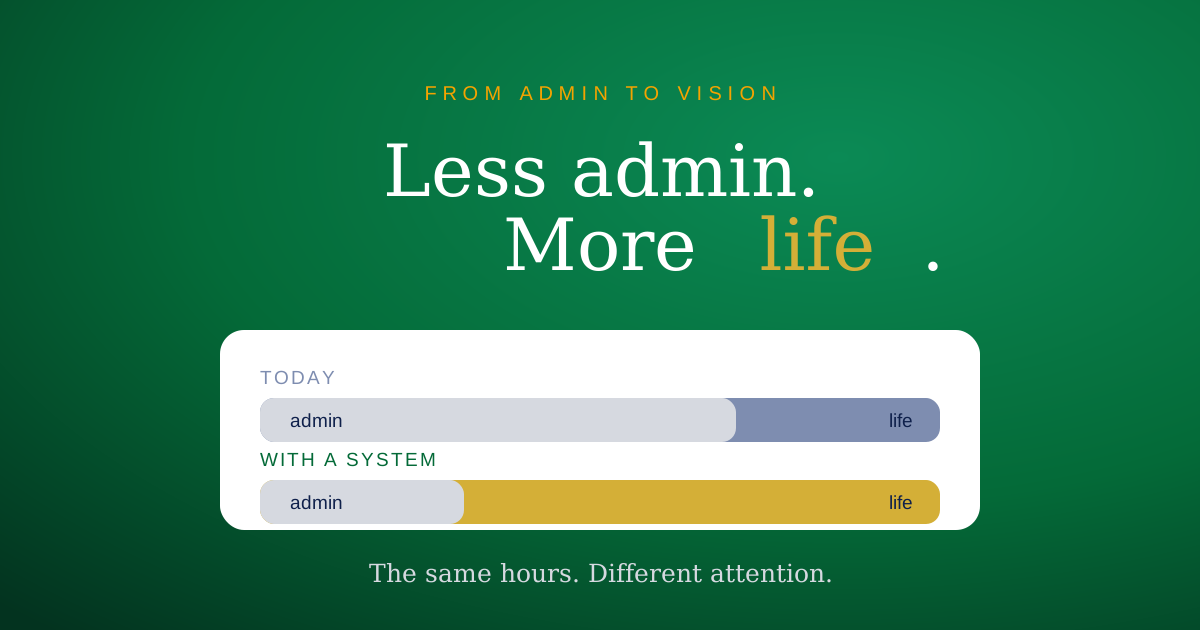
What changes is not who does the dishes. It is who is holding all of it in their head. For the wider version of this problem, see the flagship piece, From Life Admin to Life Vision.
What Secy Does, and What It Does Not
Worth being exact, because household software overpromises constantly.
Secy does not run your household. It does not book, order, or act for you, and it does not connect to your other apps. There is no automation quietly happening on your behalf.
What it does is simpler and more reliable. It holds what you give it, surfaces what is due, and nudges you so the invisible half stops living rent free in your head. The doing stays with you, where it belongs. What Is an AI Secretary? explains the layers, if you want the detail.
Final Thought
Households do not run on chores. They run on noticing.
Name the invisible half, and then stop making a person be the place it lives.
Secy holds what you save and reminds you at the right moment, so the invisible work stops living in one person’s head. 👉 https://secy.io
Sources
- Arlie Russell Hochschild. The Second Shift. Viking, 1989.
- Allison Daminger. “The Cognitive Dimension of Household Labor.” American Sociological Review, 2019.
More in Life Admin


Start with a calmer morning.

From 500+ Beta Testers Reviews