You Are Not Bad at Delegating (Nobody Taught You)
Delegation is a skill you were supposed to be taught. Most of us were not. Here is the short version, applied to your personal life.

Secy
Personal AI Secretary
Our posts are written by the Secy team, with AI assistance and a human review before publishing.
The Guilt Is Misplaced
There is a particular kind of guilt that shows up when you look at everything you are carrying. Why can I not hand this off? Why does it all land on me?
It is worth saying plainly. Struggling to delegate is not a flaw in your character. It is a missing skill, and it is missing for a good reason.
Why Nobody Taught You
At home, there is no one to delegate to. There is no team, no assistant, no colleague whose job is to take the piece you hand over. The tasks simply come back to you, so the muscle never gets built.
The places that do teach delegation come with structures that do not exist at home. So you arrive at “hand things off” with no practice and no framework, and then feel bad for not being good at it. That is not a fair test.
Four Questions That Do Most of the Work
You do not need a theory. You need a filter. Four questions get you most of the way.
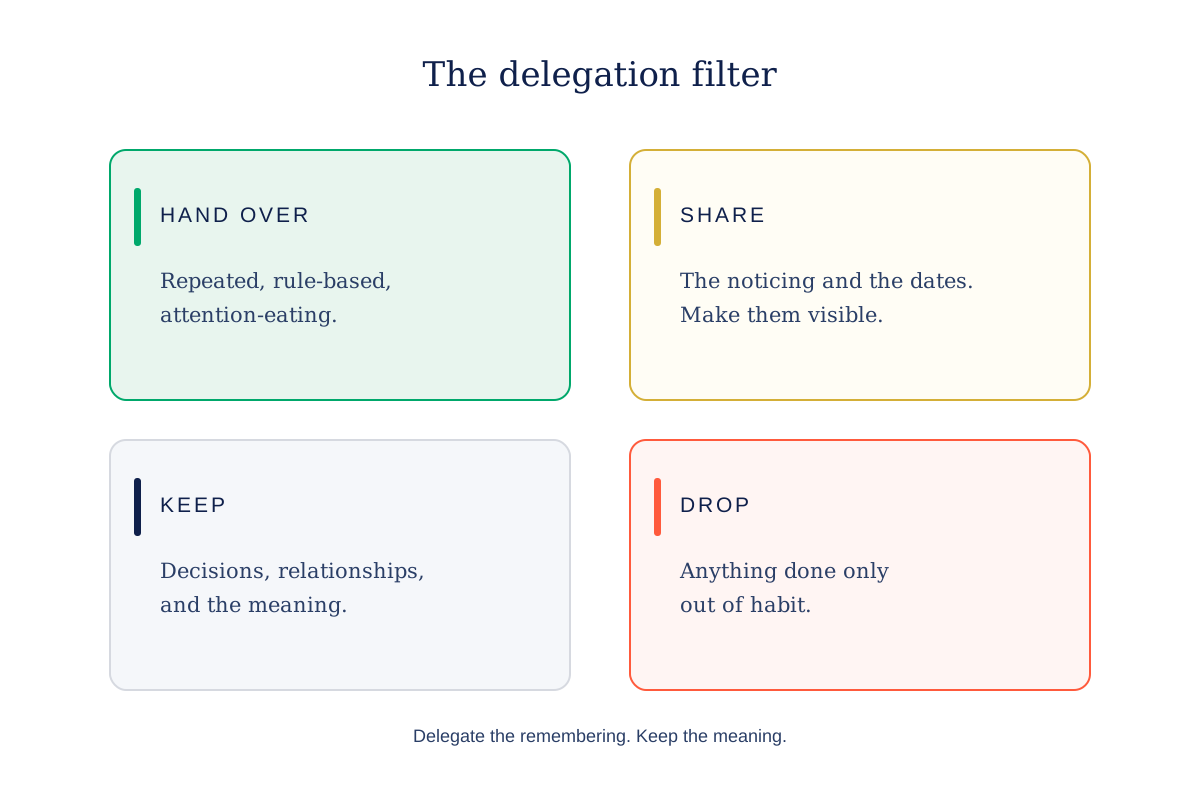
Is it repeated? Anything that comes back every week or month is a candidate. One-off decisions rarely are.
Is it rule-based? If you could write instructions for it, it can be handed over. If it needs a judgment you would have to make again each time, keep it.
Does it need your taste? Choosing a gift for someone you love is not a task. It is a relationship, expressed. Keep those.
Does it eat your attention without using it? Remembering, tracking, checking, following up. This is the work that drains people most, and it is the best thing to hand over.
What to Hand Over First
Start with the load that is repetitive and low-stakes to get wrong.
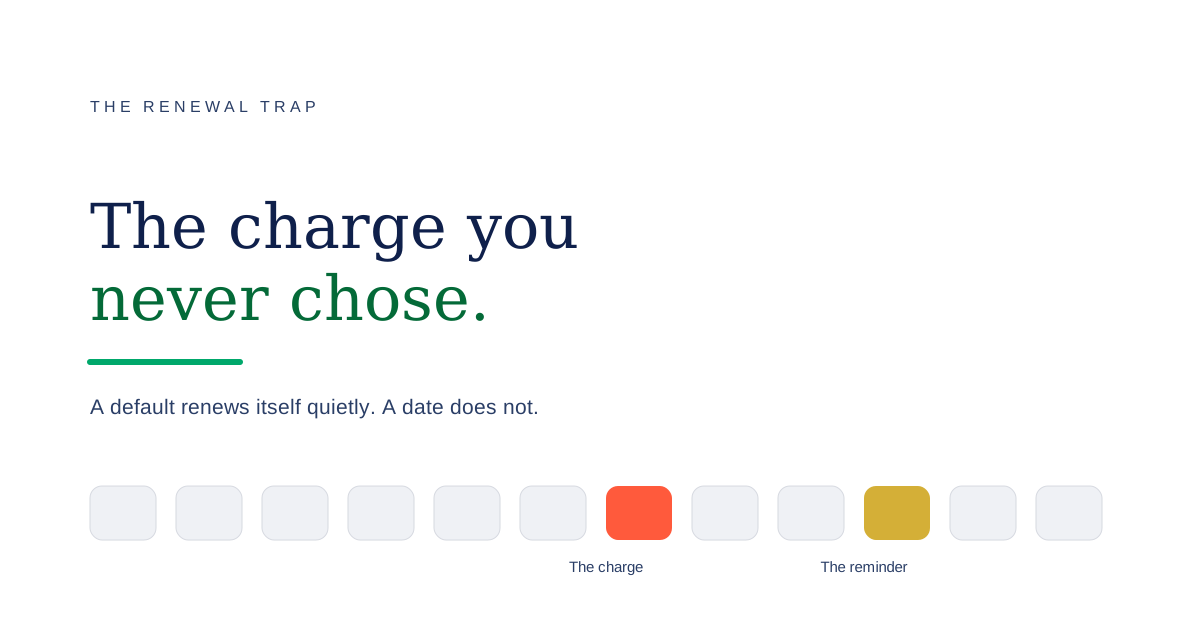
- Renewals and deadlines. Insurance, subscriptions, documents, the things with a date attached.
- Research you keep postponing. The options for a school, a plumber, a plan. Collected, not decided.
- Records. Receipts, warranties, appointments, health notes, anything you will want later.
- The open loops. The ideas and half-decisions you do not want to lose.
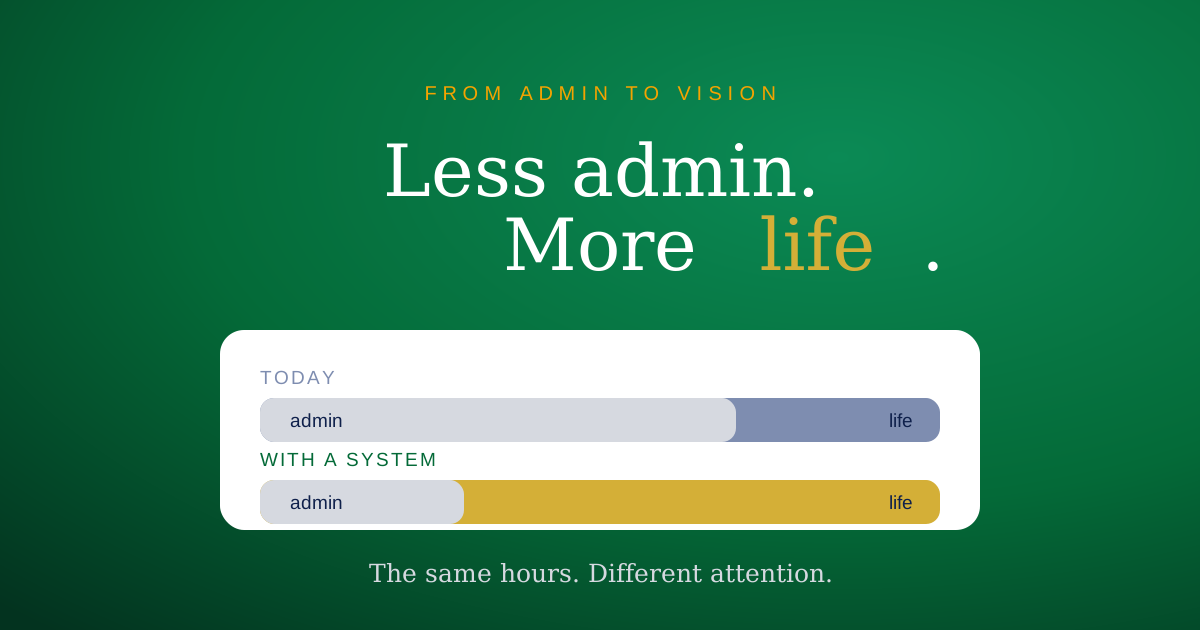
Notice what these have in common. None of them are the point of your life. All of them crowd it.
What to Keep
Some things should never be delegated, and it is worth naming them so you stop feeling guilty about it.
Keep the decisions. Keep the relationships. Keep anything where the doing is the point, like cooking for someone, or writing the note yourself.
Delegate the remembering. Keep the meaning.
Where the Hand-Off Actually Goes
Here is the gap for most people. Even with the filter, there is nobody to hand the list to.
This is the shape an AI secretary fits. Secy keeps what you save, so the open loops have somewhere to live instead of circling in your head. Motions turn a decision into a reminder that reaches you at the right moment, so the deadline you handed over does not quietly become a deadline you missed. Your memory holds the record, so you stop re-deciding the same small thing.
You are still doing the deciding. You are just no longer the one holding all of it in your head. If you want the comparison with task apps, AI Secretary vs a To-Do App covers why the difference is real. The household version of this problem is in Who Runs the Household?.
Final Thought
You are not bad at delegating. You were never taught, and you never had anywhere to hand things to.
Start with the repeated, the rule-based, and the attention-eating. Keep the decisions and the people. That is the whole method.
Secy gives the mental load somewhere to live: your memory, and reminders that reach you at the right moment. 👉 https://secy.io
Sources
- Merriam-Webster, definition of delegate: https://www.merriam-webster.com/dictionary/delegate
More in Life Admin

Start with a calmer morning.

From 500+ Beta Testers Reviews